



Electronic Export Information (EEI)
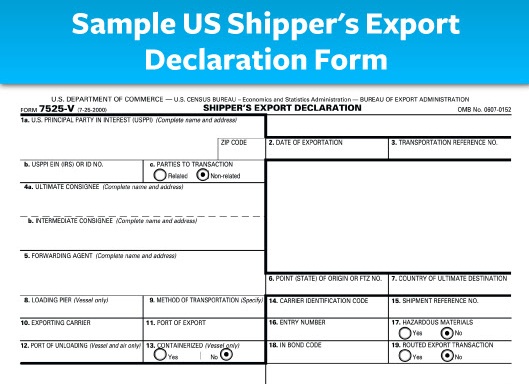
(Electronic Export Information Formerly known as Shipper’s Export Declaration)
Electronic Export Information is used to control exports and is a source document for official U.S. export statistics.
Electronic Export Information (EEI) must be filed electronically by you, your freight forwarder, or another qualified third party whom you designate.
EEI is required for shipments when the value of the commodities, classified under any single Schedule B number (the four-digit U.S. extension to the six-digit code under the Harmonized Tariff System), exceeds $2,500.
EEI must be prepared and submitted for all shipments, regardless of value, that require an export license or are destined for countries or end users restricted by the U.S. government.
The U.S. Census Bureau’s Foreign Trade Division is the controlling agency for this document, and AESDirect.
Who Can File the Electronic Export Information ?
There are three parties that can file the EEI data with AES: the U.S. Principal Party in Interest (USPPI), the USPPI’s authorized agent, or the authorized agent of the Foreign Principal Party in Interest (FPPI).
The USPPI is typically the U.S. exporter, and the FPPI is typically the foreign buyer. Freight forwarders are the primary type of agent that can be authorized to file through AES on behalf of the exporter or the FPPI.
If authorizing an outside agent to file through AES, the USPPI must provide a written power of attorney or other written authorization. This often comes in the form of a Shipper’s Letter of Instruction, a document produced by the exporter and given to the freight forwarder that outlines what is expected of the freight forwarder.
In a routed export transaction, the FPPI can provide the power of attorney or other written authorization to the freight forwarder or the USPPI.
When to File the EEI
By default, exporters typically have to file their shipment information through AES from one to 24 hours prior to the actual export of the shipment, depending on the mode of transport.
Items found on the U.S. Munitions List (USML) under the International Traffic in Arms Regulations may have to be filed earlier than items not on the USML.